


What Should You Wear to an Interview A UK Guide
- Ricky Cohen
- 1 day ago
- 9 min read

Figuring out what to wear for an interview can feel like a test in itself, but the golden rule is pretty straightforward: dress for the job you're aiming for, not the one you're in now. Think of your outfit as the first handshake—it speaks volumes about your professionalism and respect before you even say hello.
Why Your Interview Outfit Is Your First Impression
Long before you tackle the first question, your clothes have already made an introduction. It's the visual part of your personal brand, and in a crowded job market, it's one of the few things you have complete control over.
Imagine your outfit is the foundation of a house. It needs to be solid, suitable, and well-thought-out to support everything else you bring to the table. Making a smart clothing choice shows the interviewer that you've done your homework on the company culture and that you're taking this opportunity seriously.
Even though many offices have gone casual, an interview is still a formal meeting where you're being assessed from all angles. Dressing the part proves you understand that distinction and value the interviewer's time, which can kick things off on the right foot.
The Psychology of Dressing the Part
Choosing the right clothes isn’t just about looking sharp; it’s about projecting confidence and capability. When you feel put-together, it gives you a mental boost, freeing you up to concentrate on what really matters—your skills and experience.
The numbers back this up. Recent data shows that a staggering 95% of UK employers say a candidate's appearance influences their hiring decision. In fact, dressing too casually is an absolute deal-breaker for 24% of interviewers, making your outfit a detail you simply can't afford to get wrong.
Your interview outfit sends a clear, silent message to the hiring manager. It says, "I am professional, I am prepared, and I respect this opportunity."
This is especially true in sectors like construction, where the day-to-day gear is all about function and durability. An interview, however, calls for a completely different wardrobe to show you're a serious contender for roles that might involve managing a team or meeting with clients. It’s why any good recruitment consultant will always tell you to lean towards being slightly overdressed rather than underdressed.
What to Wear for a Construction or Trades Interview
Trying to figure out what to wear for an interview can feel like you’re trying to crack a code, especially with vague terms like ‘business casual’ and ‘smart casual’ thrown around. But don't overthink it. These aren't meant to trip you up; they're simply guidelines to help you look the part.
Getting it right shows the hiring manager you’ve done your homework and you respect the company's environment. It's the first non-verbal signal that you understand the workplace culture.
A Quick Guide to Interview Dress Codes
For office-based roles in construction and trades, business casual is almost always the safe bet. It hits that sweet spot between a full suit and everyday office wear. For roles that are more site-based or hands-on, smart casual is often the way to go, showing you're practical but still professional.
To make things simpler, here’s a quick breakdown of how these two dress codes stack up for an interview.
Attire Component | Business Casual (Office Roles) | Smart Casual (Site/Trade Roles) |
|---|---|---|
Trousers | Smart trousers, chinos, or a tailored skirt. | Clean, dark-wash jeans (no rips), or chinos. |
Top | Collared shirt, blouse, or a smart knit. | Well-fitting polo shirt or a casual button-down. |
Outerwear | Blazer or sports jacket is ideal. | A smart jacket or a clean, unbranded fleece. |
Footwear | Leather shoes, loafers, formal flats, or low heels. | Smart trainers, loafers, or clean, scuff-free boots. |
Think of this table as your go-to reference. When in doubt, it’s always better to be slightly overdressed than underdressed. It shows you take the opportunity seriously.
Why Your Outfit is Your First Handshake
Before you even say a word, what you’re wearing has already started the conversation. It’s the foundation of that crucial first impression.
Your choice of clothing instantly sends signals about your professionalism, how seriously you take the role, and whether you'll fit into the company culture. It's not about wearing expensive brands; it's about showing you understand the context of the job you're applying for.
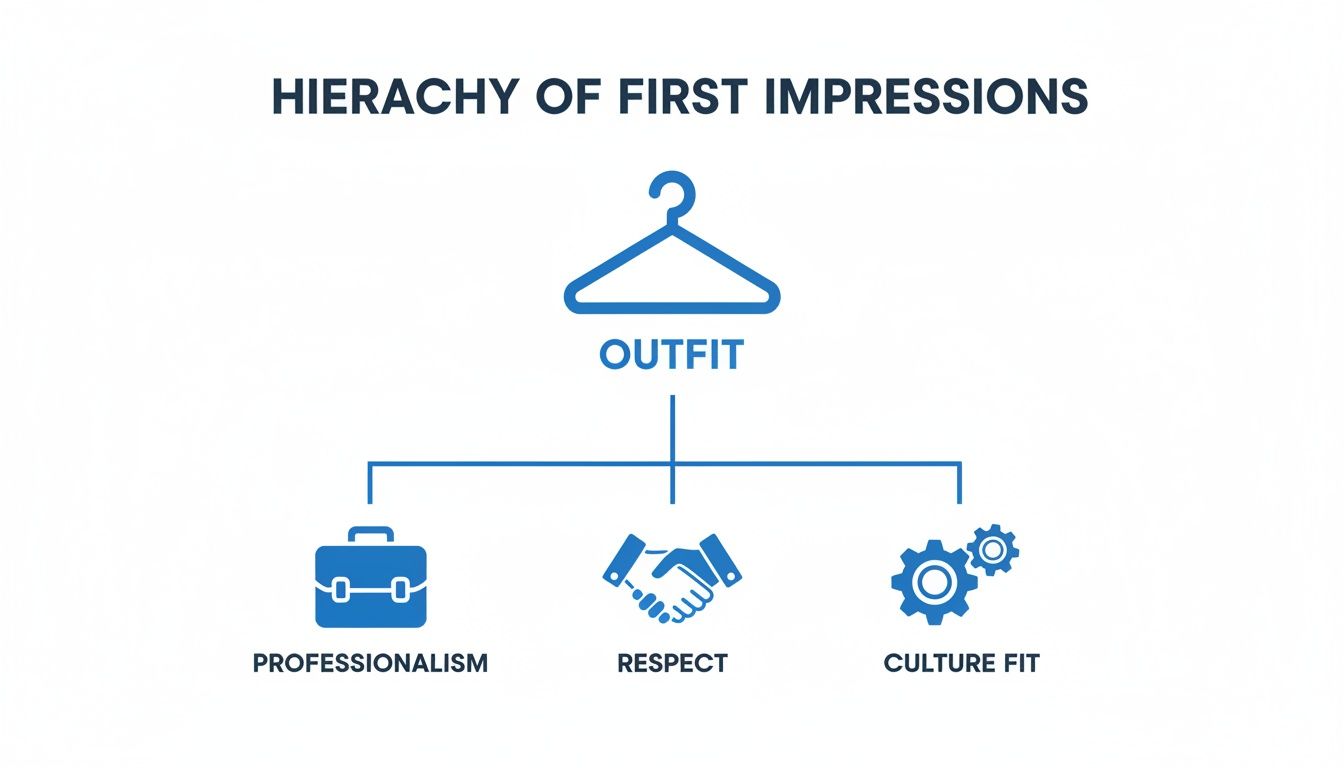
As you can see, your outfit is the base layer. Get that right, and you've built a solid platform for the rest of the interview to go well.
Nailing the Smart Casual Look
Smart casual gives you a bit more freedom, which is great, but it can also be trickier to get right. This is often the go-to for interviews for skilled trade positions or site-based roles, especially if you're meeting somewhere less formal than a corporate headquarters.
It’s all about blending everyday comfort with a professional edge. Here are the key things to get right:
On your bottom half: Stick to clean chinos or a pair of smart, dark-wash jeans. The key here is no rips, fades, or baggy fits.
For your top: A crisp, well-fitting polo shirt or a casual button-down shirt is perfect. Make sure it's ironed!
On your feet: Clean and scuff-free is the rule. Smart trainers, loafers, or even a pair of smart, clean work boots can work well.
This approach shows you’re presentable and tidy, but also practical and ready for a more hands-on environment. If you're looking for more detailed pointers, this guide to interview success for men has some excellent tips.
Dressing for Construction and Skilled Trades Interviews
Figuring out what to wear for a construction or skilled trades interview can be a bit of a head-scratcher. It’s all about finding that sweet spot between looking professional and being practical. Rocking up in a full three-piece suit might send the wrong signal, making you look like you’re out of touch with the reality of a hands-on job.
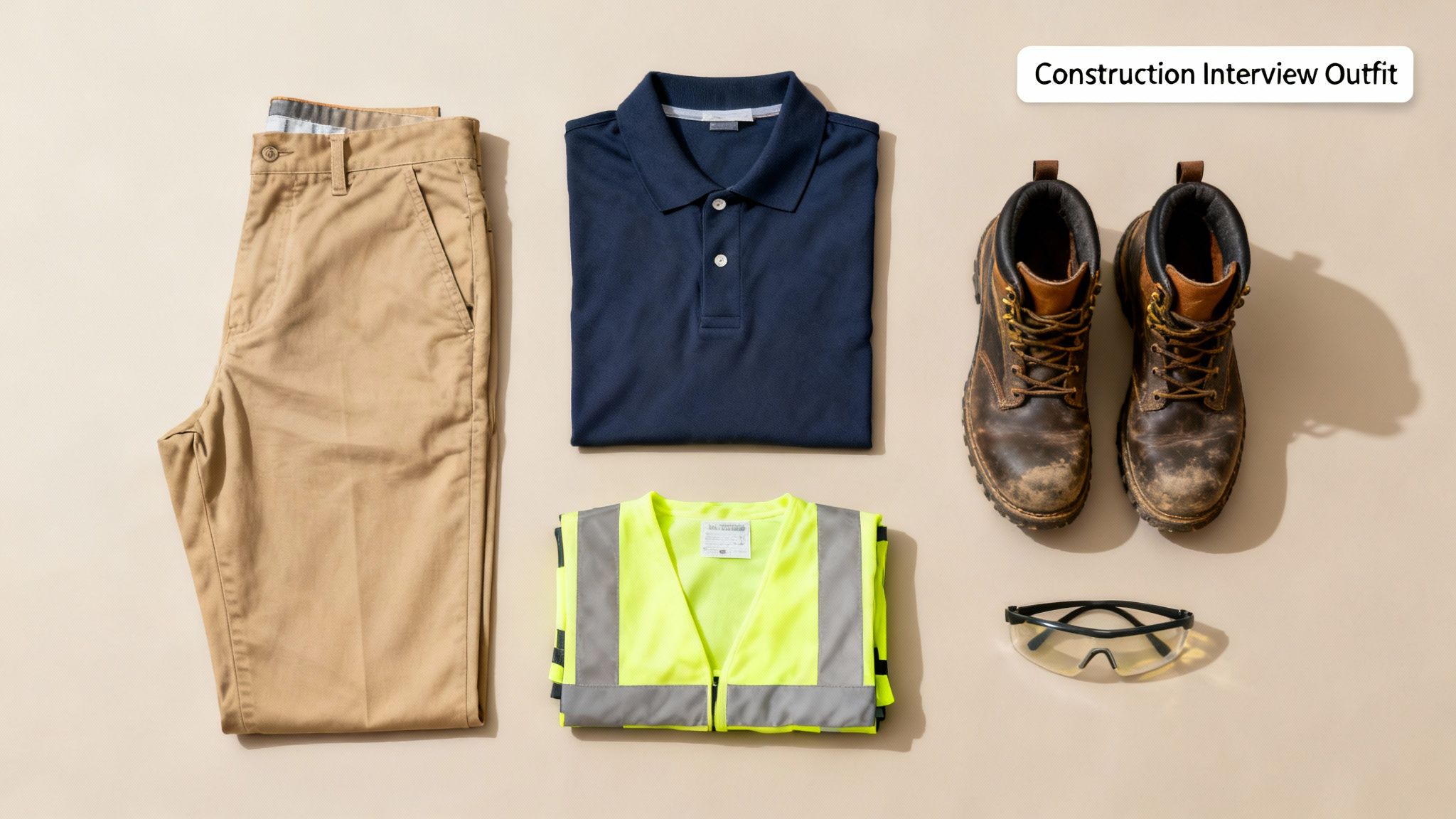
Instead, your outfit should show you’re serious about the role and you understand the industry. You want to project a clean, capable image that tells the interviewer you're a pro who takes pride in their work, whether on-site or meeting a client.
Building the Right Outfit
Think of your interview gear as the sharpest version of what you’d wear on the job. It's where practicality and professionalism shake hands.
Start with a solid pair of trousers. A new, clean pair of work trousers or even smart chinos in a neutral colour like khaki, navy, or black works perfectly. Just make sure they’re free of any rips, paint splatters, or obvious signs of wear and tear.
For your top half, a crisp polo shirt or a simple, ironed button-down shirt is a safe bet. Ditch the logo t-shirts and hoodies for this. The goal is to look like you’ve made a conscious effort because you care about this meeting.
Footwear and Final Touches
Don't underestimate your footwear; it says a lot about your site awareness. Clean, scuff-free work boots or smart safety shoes are usually your best option. I can’t stress the 'clean' part enough – turning up with mud-caked boots is an instant red flag.
The rule of thumb is straightforward: wear clothes that are clean, in good nick, and right for the role. It’s not about being formal; it’s about showing you’re a professional who minds the details.
Finally, a quick check on your overall grooming makes all the difference. Even the perfect outfit won’t land well if you look scruffy. This level of care shows you’re an organised candidate, ready to get stuck in. For more guidance on hitting the ground running, take a look at these essential tips for your first day at work in construction.
What to Wear for Office and Management Roles
When you're stepping into an interview for an office, logistics, or management position, your clothes need to speak volumes before you even say a word. Unlike a site-based role where durability is key, here it's all about professionalism and polish. This is your first opportunity to show you’re ready for a leadership role, whether that involves managing teams, handling contracts, or meeting with clients.
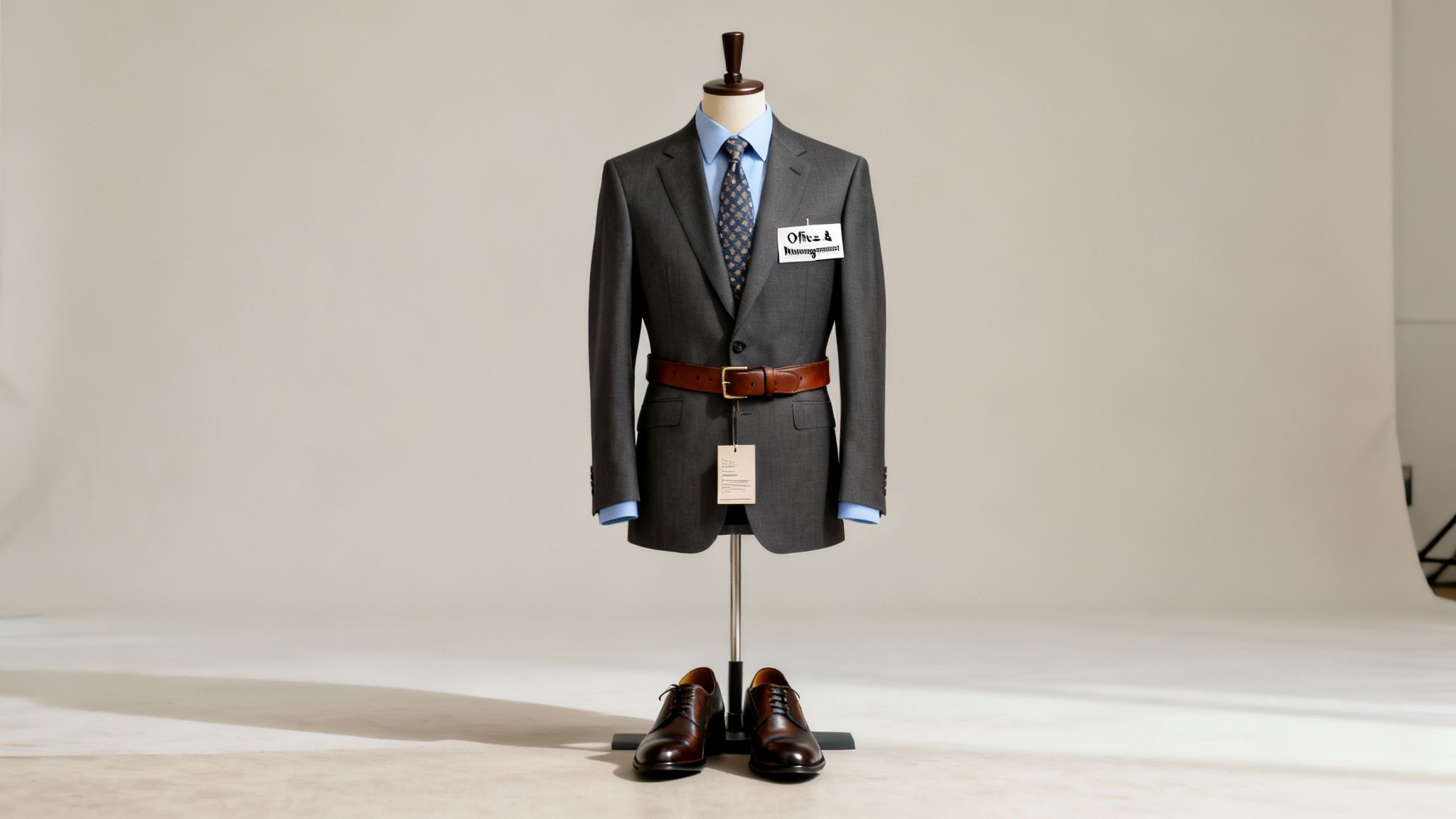
Put simply, you're dressing for the boardroom, not the building site. Your outfit should signal a serious, detail-oriented mindset. Leaning into traditional business attire is the best way to project confidence and competence from the moment you walk through the door.
Building a Professional Wardrobe
For men, you can't go wrong with a well-fitting suit in a classic colour like navy, charcoal, or grey. This is the gold standard for a reason. Pair it with a crisp, light-coloured shirt, a tasteful tie, and polished leather shoes, and you’ve got a timeless combination that shows you mean business.
Women have a bit more flexibility, but the underlying principle is exactly the same: look sharp and feel confident. A tailored suit, a smart blazer with matching trousers or a skirt, or a professional dress are all fantastic options. If you're looking for more inspiration, this detailed female business attire guide is a great resource.
The goal is to choose an outfit that makes you feel powerful but doesn't become a distraction. Your clothes should complement your qualifications, not overshadow them.
What About Changing Dress Codes?
It’s true that many UK workplaces are becoming more relaxed, but that trend doesn't apply everywhere. Recent analysis found that job ads mentioning 'casual dress' have shot up tenfold since the pandemic. However, this really depends on the industry and location. London, for example, still has the lowest number of casual dress mentions, which points to its more formal business culture.
For a management interview, particularly for a senior position like a Contracts Manager, it is always, always safer to err on the side of being slightly overdressed. You can find out more about what that job involves right here: https://www.phoenixgrayrec.com/post/what-is-a-contracts-manager-in-the-uk-construction-industry.
Ultimately, a sharp, professional appearance reinforces the message that you have the meticulous nature and authority needed to lead.
Grooming and Presentation: The Details That Matter
Choosing the right outfit is a fantastic start, but it's the finishing touches that pull your whole professional image together. Think of it like the final snagging list on a project; those small details are what elevate the finished product from good to exceptional.
These finer points aren't just about looking clean. They send a clear signal about your personal standards and your eye for detail—qualities that are highly valued everywhere, from a busy construction site to a corporate head office.
The Final Polish: A Grooming Checklist
Before you walk out the door, it’s worth running through a quick mental checklist. These seemingly minor steps can have a huge impact on the impression you make.
Hair and Facial Hair: Make sure your hair is neatly styled. If you have a beard or moustache, it should be tidy and well-trimmed.
Fingernails: Your hands are almost always on show, especially when shaking hands or passing over a CV. Clean, trimmed nails are a must.
Scents: Deodorant is essential, but go easy on the aftershave or perfume. A scent you find pleasant could be completely overwhelming to the interviewer in a small room.
Accessories and Makeup: The key here is subtlety. Keep any jewellery or makeup minimal and professional. You want the focus to be squarely on your skills and experience, not on anything distracting.
A polished presentation shows you’re a thorough and conscientious candidate who takes pride not just in your work, but in yourself.
In the end, these grooming details complete the picture. They work in harmony with your clothes to present a cohesive, professional image that tells the interviewer you’re serious, prepared, and ready to impress from the moment you arrive. Taking that extra five minutes shows respect for the opportunity and for the people you’re meeting.
Got Questions About Your Interview Outfit? We've Got Answers.
Even with the best advice, there are always those tricky little questions that pop up when you're finalising what to wear. Let's tackle some of the most common ones so you can walk into your interview feeling completely confident.
Is It Ever Okay to Wear Jeans to an Interview?
Honestly, for a first interview, it’s best to just say no to jeans.
The only time you might even consider it is if the recruiter has specifically told you the dress code is 'very casual'. Even then, we’re talking about a pair of smart, dark-wash jeans – absolutely no rips or fading – paired with a sharp shirt or blazer.
But for any construction or trades role, a good pair of work trousers or chinos is always the safer, more professional bet. It shows you respect the environment you're aiming to work in.
What Should I Do If I’m Unsure About the Dress Code?
When in doubt, it's always better to be a little too smart than too casual. You can't go wrong with a solid 'business casual' outfit. Think smart trousers with a collared shirt or a smart blouse. It hits the perfect note of professionalism without feeling stuffy.
You can also do a bit of digging yourself. Have a look at the company’s website or social media pages for pictures of the team at work. And if you’re working with a recruiter, just ask them! They’ll have the inside scoop on what the company expects.
Do I Really Need a Full Suit for a Construction Management Interview?
Yes, absolutely. For a construction management or any senior office role, a full suit is your best friend. It signals that you’re serious, professional, and ready to lead. A well-fitted suit in a classic colour like navy or charcoal grey is the industry standard for a reason.
While you might get away with a blazer and smart trousers depending on the company, a suit is never the wrong choice for a leadership interview. It's a powerful way to show you mean business.
At Phoenix Gray Rec Ltd, we don’t just find you a job – we give you the expert advice you need to land it. If you're looking for your next opportunity in construction or the skilled trades, check out our latest roles at https://www.phoenixgrayrec.com.
Comments