


Electrician Jobs Agency: Find Top UK Roles Easily
- Ricky Cohen
- Nov 6, 2025
- 13 min read

An electrician jobs agency is essentially a specialist matchmaker. It connects qualified sparks with construction firms and contractors who need their specific skills. They take care of the entire recruitment process—from finding and vetting candidates to placing them on site—saving everyone a huge amount of time in a market that never stands still.
Why Electrician Agencies Are More Vital Than Ever

The UK's demand for skilled electricians isn't just growing; it's rocketing. We're seeing a perfect storm of powerful forces that have turned specialist recruitment agencies into an essential part of the construction industry's engine room.
From huge national infrastructure projects to the green energy revolution, the need for qualified electrical professionals has never been more intense. This surge makes an electrician jobs agency a vital partner for both sparks looking for steady work and companies fighting to find reliable talent. They bridge the gap in a market known for its ups and downs, providing stability and opportunity.
The Driving Forces Behind the Skills Shortage
It's not just one thing creating this squeeze. A mix of big-picture market shifts and changes in the workforce means companies are all chasing a limited pool of talent. The pressure to get the right people on site, and quickly, is massive.
A few key drivers are really turning up the heat:
Renewable Energy Projects: The UK’s net-zero targets have opened the floodgates for investment in wind farms, solar projects, and EV charging points. All of these require electricians with specific skills.
Critical Infrastructure Upgrades: Massive projects like HS2, along with constant work on the national grid and public buildings, create a steady drumbeat of demand for experienced sparks.
An Ageing Workforce: Let's be honest, many of our most experienced electricians are getting closer to retirement. This is creating a skills vacuum that the next generation needs to step up and fill.
This isn't a small skills gap we're talking about; it's a major national challenge. The UK is projected to need over 104,000 new electricians by 2032, making it the most in-demand trade. You can see more on this in the UK Trade Skills Index 2023 report commissioned by Checkatrade.
The Agency Advantage in a High-Demand Market
In this kind of climate, a good agency gives you a real edge. For electricians, it means instant access to a pipeline of vetted jobs, so you're not constantly chasing your next contract. Agencies sort the admin, letting you focus on what you do best. This is a common entry point we cover in our guide to careers in construction.
For employers, the perks are just as big. An agency offers a ready-made pool of qualified, reliable tradespeople, which cuts hiring time and risk down to almost nothing. Instead of wading through endless CVs, you get a shortlist of candidates who are good to go. That kind of efficiency is priceless when project deadlines are tight and a labour shortage could mean costly delays.
They are the essential link that keeps projects moving and electricians working.
Finding the Right Electrical Recruitment Partner
Uncovering the right electrician jobs agency takes a bit more effort than just a quick web search. What you're looking for are genuine specialists—agencies deeply rooted in the electrical trade, not generalist recruiters who just happen to have "electrician" on a long list of sectors they cover. The goal here is to build a solid longlist of agencies that actually get it.
This means you’ve got to look beyond the top search results and start digging where the real sparks and industry pros hang out. Think of this research phase as separating the true specialists from the crowd.
Starting Your Search in the Right Places
A great place to start is within industry-specific communities. Online forums can be a goldmine for honest, unfiltered feedback and recommendations. Websites like ElectriciansForums.net are packed with threads where tradespeople share their real-world experiences—the good, the bad, and the ugly—with various agencies. Keep an eye out for the names that keep popping up for all the right reasons.
Professional bodies are another top-tier source. When an agency is affiliated with an organisation like the Recruitment & Employment Confederation (REC), it's a strong signal they’re committed to professional standards and ethical practices. It’s a key trust signal you shouldn't ignore.
Here's an example of how the REC is presented as a valuable partner, highlighting its importance in the sector.
Taking a moment to verify an agency's membership gives you peace of mind that they adhere to a recognised code of conduct, which is vital for both electricians and the companies hiring them.
Spotting a Specialist from a Generalist
Once you start building your list, the next job is to filter out the jacks-of-all-trades. A true specialist will have clear, undeniable proof of their focus on the electrical industry.
Look for these tell-tale signs:
Specific Job Listings: Their website should be full of detailed roles for electricians, not just one or two generic ads. You want to see specifics like "18th Edition Electrician," "JIB Gold Card Approved Electrician," or "EV Charger Installer."
Relevant Client Testimonials: Are their testimonials from well-known electrical contractors and construction firms? Vague praise from an unnamed "HR Manager" is a definite red flag.
Knowledgeable Content: A dedicated agency often creates content—blogs, guides, market updates—that speaks directly to the electrical trade. This shows they understand the unique challenges and opportunities in your field.
A key differentiator of a specialist electrician jobs agency is its consultants' ability to talk your language. They should understand the difference between domestic and industrial work, know what a JIB card signifies, and grasp the importance of specific qualifications without you needing to explain.
By focusing your search on these industry-specific channels and learning to spot the markers of a true specialist, you can put together a strong shortlist of potential partners. If you want a head start, check out our breakdown of the top recruitment agencies for electricians in the UK for 2025 to see what the leading specialists are offering. This initial groundwork ensures you’re investing your time with agencies that can genuinely deliver.
How to Vet and Compare Potential Agencies
So, you’ve got a shortlist of potential agencies. Now for the crucial part: putting them under the microscope to see who really measures up. This is where you separate the good from the great, finding a recruiter that genuinely understands what you need, whether you’re a sparky looking for your next gig or a site manager desperate for reliable talent.
Don't just go with your gut on this one. You need a methodical approach. For electricians, that means scrutinising the quality of the roles they're offering and, just as importantly, how they handle your wages. For employers, it’s all about their technical know-how and their ability to screen candidates properly.
This decision tree gives you a simple visual path for finding and assessing an agency.
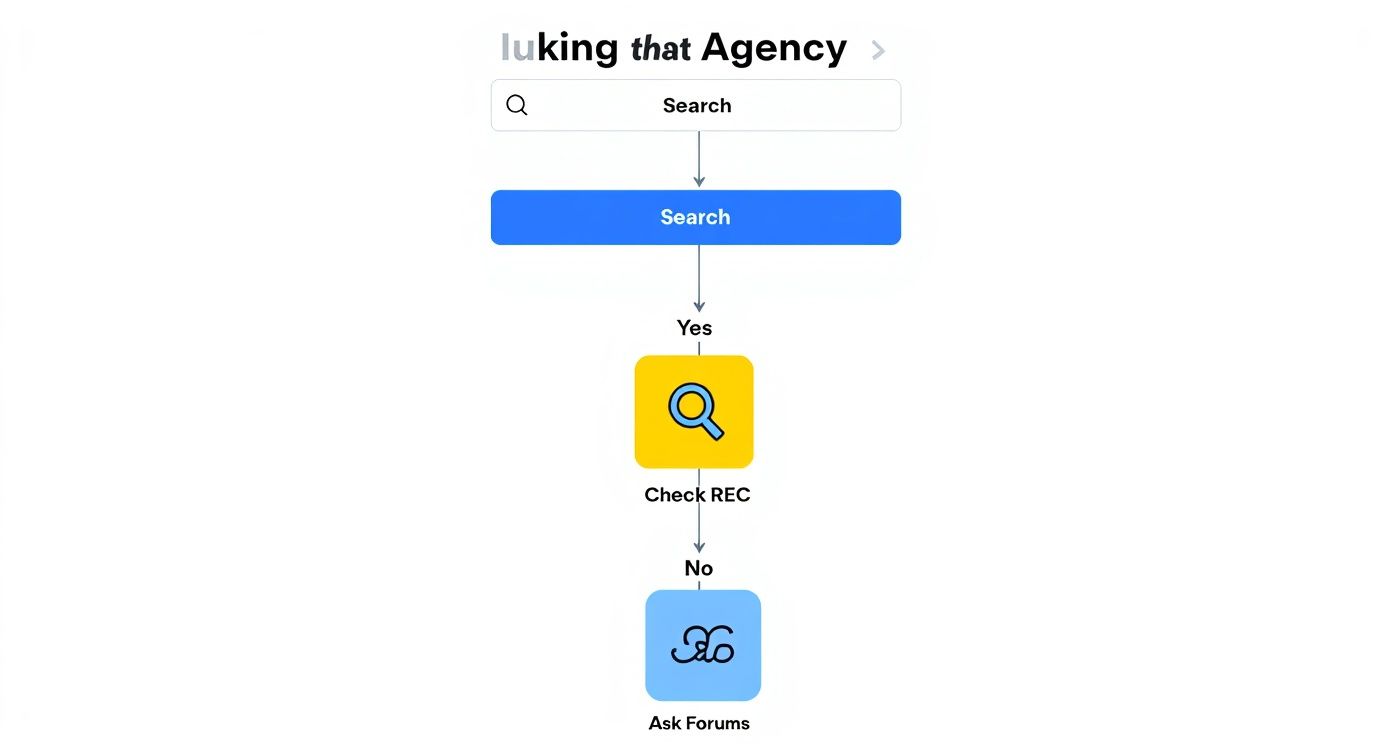
As you can see, after your initial search, the next step is always verification. You can do this by checking for accreditations from professional bodies or, even better, by asking around and getting feedback from others in the trade.
For Electricians: Assessing Job Quality and Support
The real test of an agency is the quality of the work it finds you and the support you get along the way. It’s easy to get drawn in by flashy job titles, but you need to dig deeper into the specifics of what's actually on the table.
Pay very close attention to how they manage payments. A transparent, trustworthy agency will lay out all your options clearly, so you know exactly what to expect on payday—no nasty surprises.
PAYE (Pay As You Earn): This is the straightforward option. You are an employee of the agency, which means they sort out your tax and National Insurance contributions. You also get statutory benefits like holiday pay.
Umbrella Company: Here, you're technically employed by a separate umbrella company that contracts you out. They handle your pay and all the necessary deductions.
CIS (Construction Industry Scheme): This one's for self-employed electricians. You’re responsible for your own tax and NI, but the contractor will deduct a percentage from your payments to go towards your tax bill.
A decent consultant will take the time to explain these properly, helping you decide what works best for your situation. They should be your advocate, making sure contracts are fair and you’re paid on time. If you want to get a better sense of what their role involves, it's worth reading up on the duties and responsibilities of a recruitment consultant.
A top-tier electrician jobs agency should feel like a partner in your career. They should be proactive, communicating regularly about new roles that match your skills and checking in once you’re on site to make sure everything is running smoothly.
For Employers: Evaluating Technical Expertise
If you’re hiring, your main concern is simple: can the agency find you people who are not just qualified on paper, but are actually competent, reliable, and can hit the ground running? This is where a specialist agency really earns its fee.
You need a partner who speaks your language and understands the non-negotiables of the electrical trade. Can they confidently tell you the difference between a domestic installer and an industrial electrician? Do they immediately grasp the importance of a JIB Gold Card or an 18th Edition qualification? If they don't, they're not the agency for you.
To make this easier, here’s a quick checklist you can use to score and compare potential agencies against the things that really matter.
Agency Vetting Checklist for Electricians and Employers
Use this checklist to score and compare potential electrician job agencies based on key performance indicators.
Vetting Criteria | What to Look For | Importance (High/Med/Low) |
|---|---|---|
Technical Knowledge | Do consultants understand qualifications like JIB Gold Card, 18th Edition, and ECS cards without prompting? | High |
Screening Process | Do they conduct thorough reference checks and verify qualifications and right-to-work status? | High |
Client Reputation | Do they have positive, verifiable testimonials from other electrical or construction companies? | Med |
Candidate Support | Do they provide clear communication and support to electricians during and after placement? | Med |
Contract Clarity | Are their terms of business for both clients and candidates clear, fair, and transparent? | High |
Going through this process systematically will give you the confidence that you’re picking an agency that will save you time, reduce hiring risks, and ultimately become a valuable partner.
Mastering the Agency Onboarding Process

So you've found an agency that looks like a good fit. What's next? The registration process. It’s easy to see this as just another round of paperwork, but getting this right from the start is what separates the sparks who get the best calls from those who don't. How you handle this stage directly influences the quality and frequency of the jobs you’re offered.
A top-tier electrician jobs agency will have a straightforward, organised system. They need to verify who you are, what you can do, and your legal right to work in the UK. This isn’t just ticking boxes; it’s about their professional duty to supply clients with fully qualified and compliant electricians. Getting your ducks in a row beforehand makes their life easier and gets you on their 'go-to' list much faster.
Get Your Paperwork Ready to Go
Before you even pick up the phone, have all your essential documents ready. It’s the first sign of a professional who’s serious about getting to work, and it makes a brilliant first impression. Think of it as your professional passport.
Here’s what any reputable agency will need to see:
Your ECS/JIB Card: This is the gold standard. It’s the non-negotiable proof of your grade and standing in the industry.
Qualification Certificates: Have digital copies of your NVQ Level 3, 18th Edition, and any specialist tickets like 2391 Inspection & Testing.
Proof of Right to Work: Usually a passport or another form of official ID that confirms you can legally work in the UK.
An Up-to-Date CV: Make sure it’s sharp and clearly details your work history. Highlight the types of sites you've worked on—commercial fit-outs, industrial installations, high-end domestic refurbs.
Pro tip: Scan these and save them as PDFs on your phone or in a cloud folder. When the consultant asks for them, you can fire them over in minutes, which keeps things moving and shows you mean business.
Your First Chat: Making It Count
That first call or meeting with a recruiter is your moment to shine. Don't just read your CV out to them. Talk about what you want to do next. Are you chasing long-term contracts for stability, or do you prefer shorter, high-rate jobs? Are you an industrial pro who loves containment, or is high-spec commercial your sweet spot? Be specific.
It's not just about what you've done, but what you excel at. Tell them about your strengths. If you're brilliant at first and second fix, say so. If you're a wizard with complex control panel wiring, make sure they know. This is what helps a good consultant place you in a role you'll actually enjoy and thrive in.
This kind of clarity also sets the stage for talking about money. Skilled electricians are in massive demand, and knowing the going rate is vital. With data for 2024-2025 showing average day rates hovering around £335 and potential annual earnings topping £87,100, you need to know your value.
Check out some up-to-date electrician pay statistics to understand how rates shift based on your skills and location. This arms you with the confidence to have a proper, informed conversation about what you expect to be paid from day one.
Building a Strong, Long-Term Agency Partnership
Landing a job through an agency is a great start, but it's really just the beginning. The real game-changer is turning that first placement into a lasting professional relationship. When you do that, the agency stops being just a service and becomes a genuine partner in your career or your business—one that consistently brings you value.
For both electricians and employers, this kind of partnership thrives on clear, continuous communication. It's a two-way street. By providing feedback and simply staying in touch, you help the agency understand exactly what you need, which means they get better and better at serving you over time. A proactive approach is what leads to perfect-fit future roles.
In today's market, these strong relationships are more critical than ever. The electrician shortage is still a major challenge across the UK, with vacancy rates stubbornly sitting above the national average. You’ve got an ageing workforce, not enough new talent coming through the ranks, and a constant demand for skilled sparks. In this climate, a good electrician jobs agency is essential for keeping projects staffed and on schedule. You can dig deeper into the current electrician employment figures to see the full picture.
How Electricians Can Nurture the Relationship
Once you're on the job, don't go quiet. Keeping your consultant in the loop makes a huge difference. A quick call or an email to share how things are going on-site helps them get a feel for the kind of work you genuinely enjoy and are good at.
This connection is even more important as a project starts wrapping up. If you can give your agent a heads-up a couple of weeks before a contract finishes, they can start working on lining up your next role straight away. That means less downtime for you and a smoother transition into the next job.
And always, always keep them updated on your new skills and tickets:
Just passed your 2391 Inspection & Testing? Tell them immediately.
Finished an EV charging installation course? This opens up a whole new world of opportunities.
Gained experience on a specific site, like a data centre or hospital? That level of detail helps them find you similar, often higher-paying, roles.
Think of your agency consultant as your personal career agent. The more they know about your skills, your goals, and when you're available, the better they can champion you and find placements that are a perfect match.
Best Practices for Employers
For companies, forging a strong bond with an agency takes the same commitment to open communication. The more insight you share, the more targeted their search can be. Don't just fire over a generic job spec—give them the full story behind the role and the team.
Providing detailed, constructive feedback on candidates is also incredibly valuable. If an electrician was a fantastic fit, tell the agency exactly what made them great. If someone wasn't quite right, explain why in specific terms. This feedback is what refines their search process, ensuring the next person they send is an even closer match for your company culture and technical needs.
Common Questions About Electrician Job Agencies
Whether you're an electrician scouting for your next contract or a site manager who needs reliable sparks on-site, stepping into the world of recruitment can feel a bit confusing. To cut through the noise, we've put together some straight answers to the questions we get asked all the time.
The idea is simple: demystify the process so you can work confidently with an agency. Getting these details clear from the start avoids any crossed wires and builds a solid professional relationship from day one.
How Much Does It Cost to Use an Agency?
This is usually the first question on everyone's mind, and for electricians, the answer is great: it costs you absolutely nothing. Any reputable agency gets its fees from the company doing the hiring. The rate you're quoted is the rate you get paid—no hidden deductions for the recruiter’s work.
For employers, the cost is wrapped into the hourly charge rate for the electrician. This single figure covers everything: the worker's wages, National Insurance, holiday pay, pension contributions, and the agency's margin. It's an all-in-one solution that delivers a vetted, compliant, and payroll-managed electrician without the administrative burden.
What Is the Difference Between Temporary, Contract, and Permanent Roles?
Knowing the lingo helps you find exactly what you're looking for. Each type of role serves a different purpose for both the sparky and the site.
Temporary Work: This is your short-term cover, maybe for a few days or weeks to handle holiday leave or a sudden burst of work. It’s all about flexibility.
Contract Work: Think project-based. These roles have a set duration, often lasting several months, and are ideal for specific construction phases like first and second fixes.
Permanent Roles (Perm): Here, the agency plays matchmaker. They find a company a full-time, direct employee. Once you're hired, you go onto the company’s payroll, not the agency's.
A good specialist agency will have a healthy mix of all three, giving you real choice.
Be upfront with your consultant about what you want. Whether you're after the stability of a long-term contract or the freedom of short-term gigs, telling them clearly helps them find the right match for you, faster.
What Happens If a Placement Isn't a Good Fit?
It doesn't happen often, but sometimes a job just isn't right. If you're an electrician who turns up on a site that's nothing like the description, or the work isn't what was agreed, your first move is to call your agency consultant straight away. They're your point of contact and will step in to sort it out, whether that means having a word with the site manager or finding you another placement.
The same rule applies to employers. If a candidate isn't cutting it, let the agency know. A professional outfit will have a clear process for this. They’ll usually find a replacement quickly to keep your project on track with minimal disruption. Honest, immediate communication is the key. You really see an agency's worth in how they handle problems, not just when things are going smoothly.
Ready to connect with a recruitment partner who gets the electrical trade inside and out? Phoenix Gray Rec Ltd specialises in finding top-tier talent for the UK's construction industry. Find your next role or your next great hire with us today.
Comments